For private market investors, secondary sales can be a powerful means to generate liquidity, reposition portfolios, and redeploy capital to invest in new, potentially more lucrative private strategies.
These transactions, once viewed as a sign of distress, or a forced move, have become an effective portfolio-management tool in private markets in recent years. Secondary sales create liquidity without requiring investors to wait for when the underlying assets are sold, and more importantly, they give investors a mechanism to actively manage a portfolio that is otherwise relatively illiquid and difficult to rebalance. We believe a proactive, informed approach, supported by an experienced team, robust data, and aligned interests, can help investors optimize returns while minimizing risk.
At NEPC, we work closely with clients throughout the secondary sales process, providing a comprehensive range of resources, including data gathering, due diligence in selecting a secondary sales broker, documentation, and coordination with the general partner. We provide this support either in our capacity as an advisor or as an outsourced chief investment officer (OCIO).
Average Alternative Allocations1 (%)
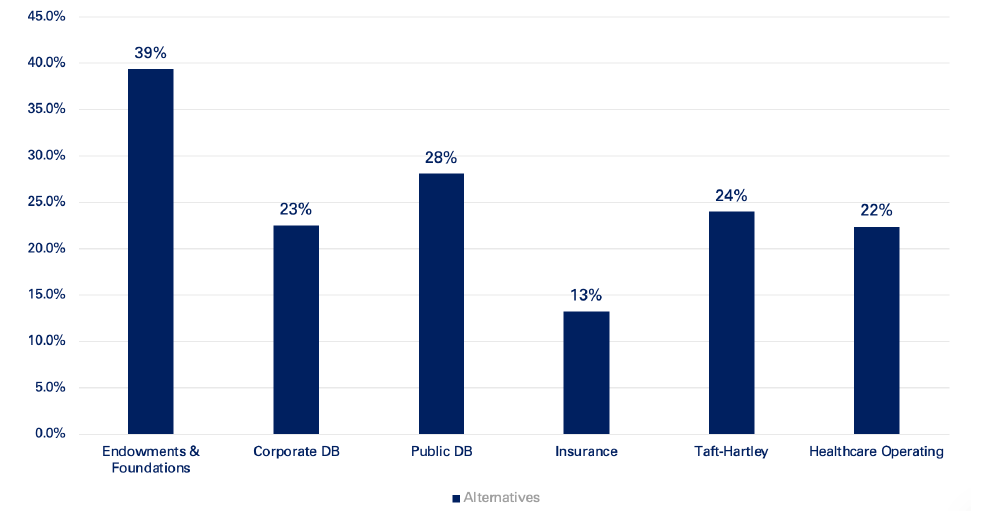
1 Source: Weighted average allocations from Investment Metrics, as of December 31, 2025. Allocations may include private equity, private credit, real estate, real assets, and/or hedge funds. Universe includes Endowments & Foundations, Corporate Defined Benefit, Public Defined Benefit, and Taft-Hartley plans with assets exceeding $1 billion, all Insurance portfolios, and Healthcare Operating portfolios with assets exceeding $500 million.
Understanding Limited Partner (LP) Secondary Sales
A secondary sale by a limited partner involves an investor selling their interests in illiquid private market assets, such as private equity, real estate, infrastructure, or credit funds, before the natural term end or wind-up of those investments. The primary purpose is access to liquidity, but investors must also consider transaction costs, potential discounts to net asset value (NAV), and the resources required to execute a successful sale. Secondary transactions are often completed at a discount to NAV, but this discount applies only to the investment’s remaining unrealized value. As a result, we maintain that investors should assess the overall outcome of a secondary sale based on total return—not simply the headline discount to NAV.
In many cases, private market funds make distributions well before investors consider a secondary sale2. Therefore, sellers may have already received meaningful cash returns on their investment before selling their remaining interest. In a secondary sale, any discount to NAV would be applied to the remaining unrealized value of the fund interest, not to capital that has already been returned to the seller via distributions. When viewed in this context, the economics of a secondary sale may be more favorable than the headline discount suggests, particularly when the proceeds can be redeployed into higher-conviction strategies.
As secondary markets have come of age, we see chief investment officers and other investors now relying on secondary transactions to manage liquidity, adjust exposures, and refine overall portfolio construction.
2Depending on factors such as fund strategy, market conditions, and the specific liquidity needs of the LP.
Liquidity Management for Institutional Portfolios
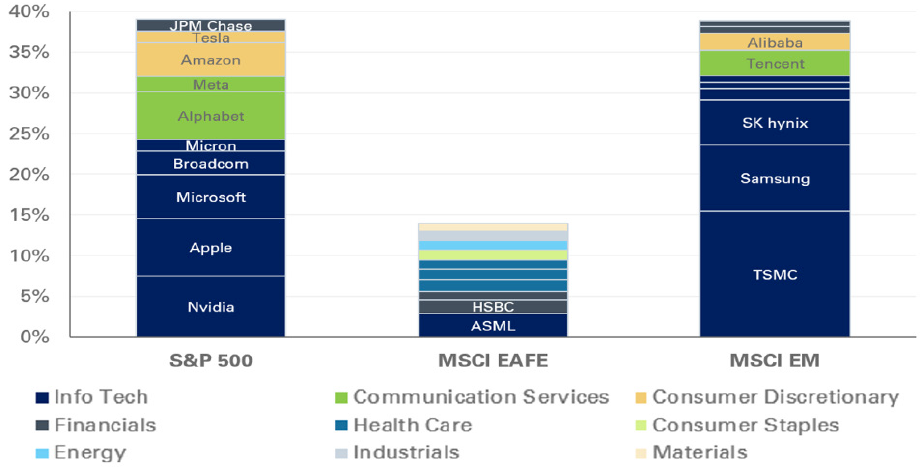
Diversification across sectors, geographies, and asset markets, including private investments, remains a critical component of institutional portfolio construction, particularly as commonly used indexes in the equity market have become increasingly concentrated with a narrower subset of companies in both U.S. and international public markets. As of July 31st, the largest 10 companies in the S&P 500 represent nearly 40% of the index, and in emerging markets, the top three names represent nearly 30% of the EM Index3.
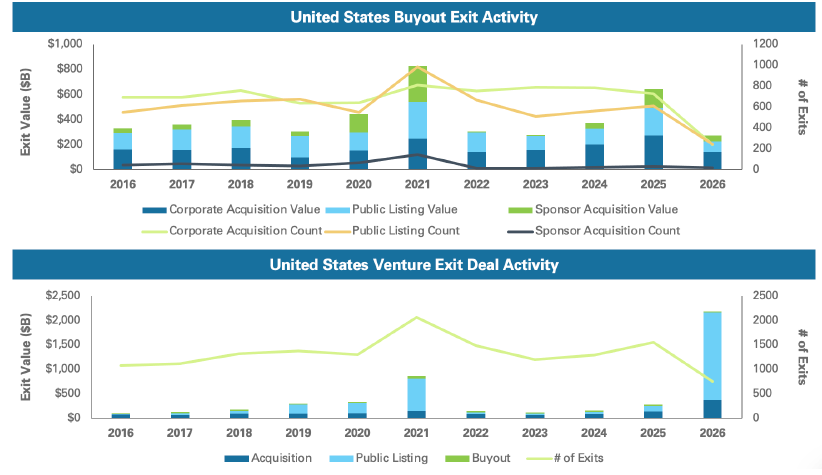
However, an increasing shift towards private markets has also introduced structural illiquidity into portfolios. Over recent periods, the IPO market has been somewhat frozen, extending hold times for private investments; distribution levels for funds in year three-to-six of their lifecycles have also fallen relative to historical norms. This has created a mismatch between expected and realized liquidity for many investors and exit activity (shown below) illustrates that4.
While increased diversification is one motivation for secondary sales, other examples include defined benefit plans preparing for a pension risk transfer, or endowments reducing vintage concentration, and reallocating into new opportunities. At NEPC, we believe it is critical to understand how to navigate the secondary sales process in order to maximize gains and minimize risks.
3Source: S&P, MSCI, FactSet. MSCI EAFE components not labeled include Mitsubishi UFJ, Roche Holdings, Novartis, AstraZeneca, Nestle, Shell, Siemens, and BHP Group. MSCI EM components not labeled include MediaTek, Delta Electronics, Hon Hai, China Construction Bank, and HDFC Bank. Weights as of 7/31/2026.
4Source: Buyout exit data from Pitchbook Q1 2026 US PE Breakdown Report as of 06/30/2026. Venture exit data from Q2 2026 Pitchbook NVCA Venture Monitor Report as of 06/30/2026. Note, significant public listing activity in 2026 includes the SpaceX IPO.
*NEPC does not offer tax or legal services. The information provided in these materials has been provided for educationalpurposes. Nothing in these materials, including the opinions shared, should be interpreted as advice related to finance, tax orlegal decisions.
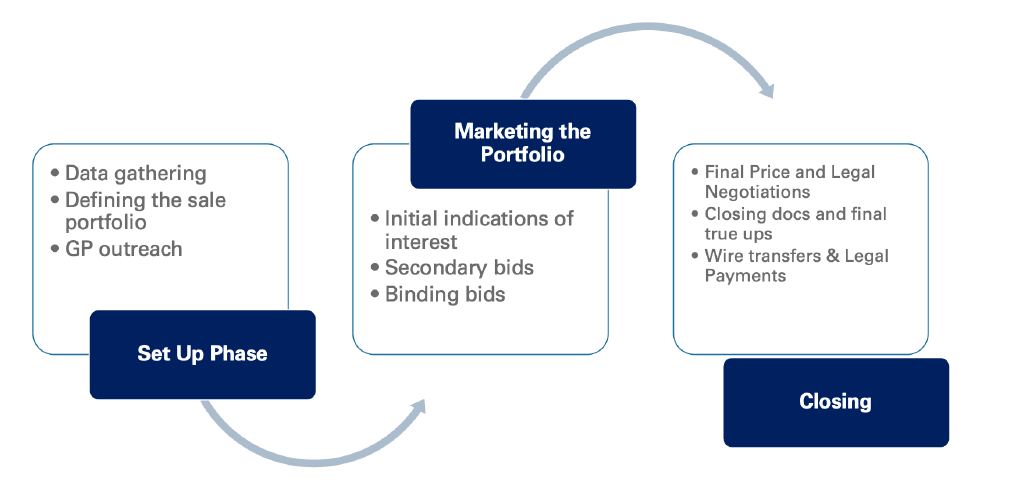
Key Steps in the LP Secondary Sale Process
1. Multi-Party Involvement
Secondary sales are inherently complex and require specialized expertise because they involve multiple parties, data sources, and operational challenges that go beyond primary sales tracking. We believe it’s prudent to engage experienced counsel with LP-led secondary transaction expertise and a broker aligned with the portfolio’s size, asset mix, and key GP requirements.
Similarly important is assessing the broker’s team, relevant experience, and buyer relationships. Larger or repeat sellers may improve efficiency by maintaining a pre-qualified broker pool.
2. Preparation and Data Gathering
We believe success in secondary sales requires meticulous organization. Sellers must assemble comprehensive and current documentation for all assets considered for sale. This includes audited financial statements, partnership agreements, capital account statements, side letters, amendments, GP communications, quarterly letters, and records of recent capital calls and distributions.
A well-structured request for proposal (RFP) sets up sellers for success, enabling them to efficiently evaluate potential brokers and legal counsel. Key criteria include the firm’s reputation, experience with similar transactions, level of support, approach to maximizing sale value, fees, and technology. The specific deal team is equally important, as investors will work closely with them throughout the process. Institutional investors should prioritize these factors to ensure the selected partner is well aligned with the transaction’s objectives.
3. Marketing the Portfolio and Buyer Engagement
We typically see the sale process unfold in set phases: initial indications of interest, secondary bids, and final binding offers. Brokers market the portfolio to a broad pool of buyers, seeking to maximize price and align the timing with the sellers’ preference. Multiple buyers may be involved, especially for large or diverse portfolios, but this can increase legal complexity and costs. Transparency and timely updates on portfolio valuations, especially as capital calls and distributions occur, are critical for buyer confidence and successful negotiations.
4. Legal Documentation and Closing
Final stages involve intensive legal negotiations, including purchase and sale agreements and transfer documentation with GPs. In our experience, legal costs can be substantial, particularly with numerous GP line items. Sellers must be prepared for post-closing “true ups” to adjust for cash flows occurring after the record date, and to split legal and incidentals costs as appropriate.
Types of Transactions and Considerations for Structuring
Institutional investors have multiple structural options when executing a secondary sale. We believe the optimal approach depends on portfolio composition, the investor’s priorities, and timeline available. The table below compares approaches we see commonly used across key dimensions:
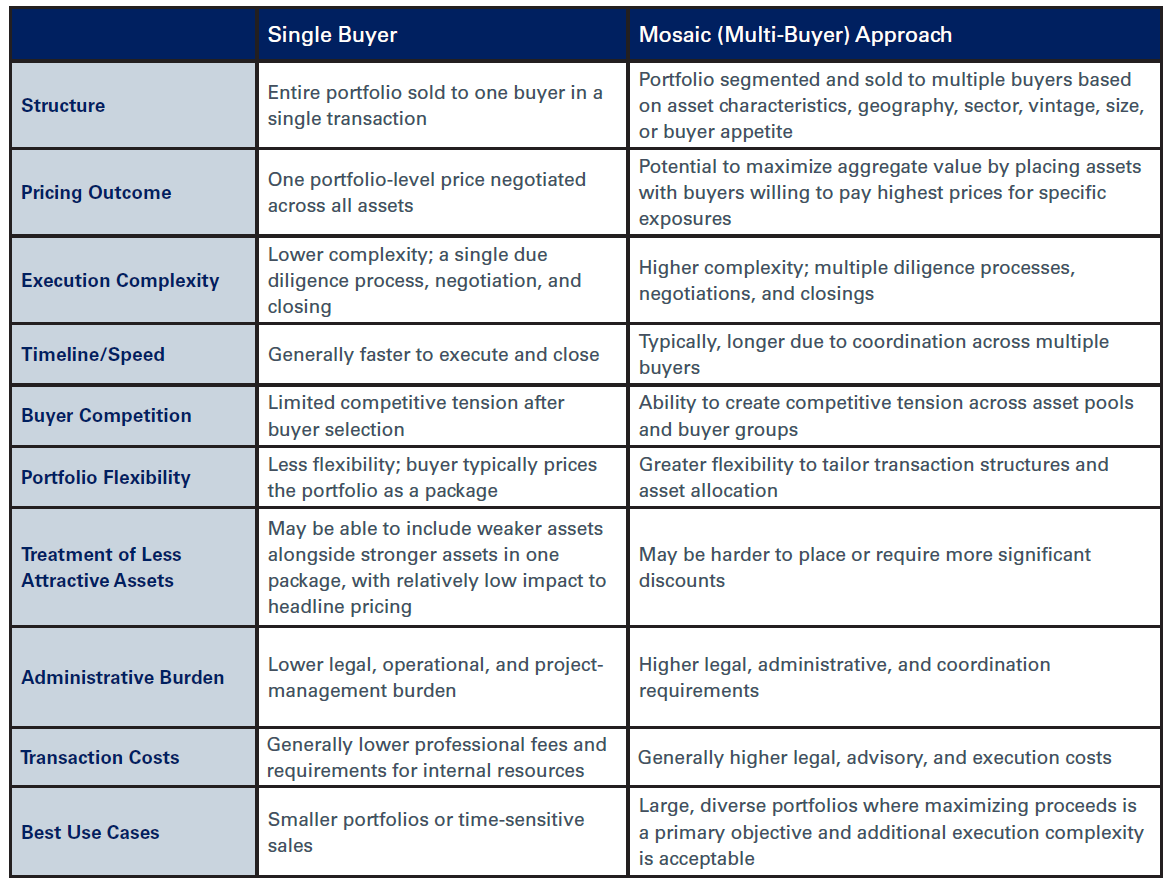
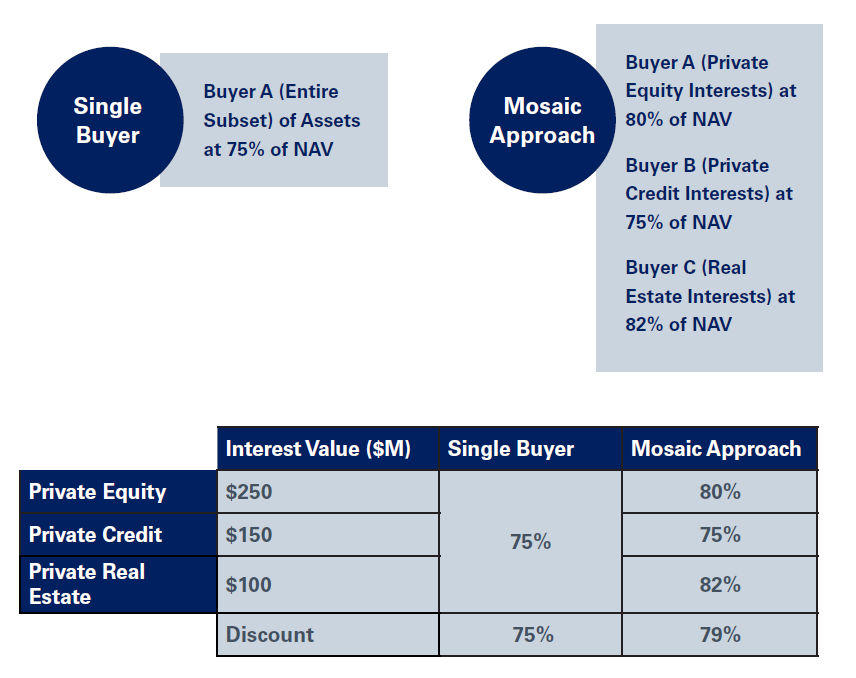
The choice between these approaches is rarely straightforward, and the right structure will depend on factors specific to each investor’s portfolio and objectives. A broker and consultant can help evaluate the tradeoffs across the sale structure and transaction type. For example, an immediate all-cash sale offers a quicker exit; meanwhile, a deferred sale may reduce the headline discount but delays the transfer of the asset and could introduce ongoing exposure to its performance. Understanding these dynamics, and how they interact with portfolio composition and liquidity needs, are central to designing a transaction that achieves the investor’s goals.
Critical Success Factors
At NEPC, we believe the following items are fundamental for success:
Accurate data management: Complete and reliable data on assets and cash flows are essential for credible pricing and to avoid surprises in due diligence.
GP consent and communication: GPs often have approval rights and may restrict information sharing with buyers. Early and proactive outreach are vital.
Understanding fee structures and incentives: Broker compensation can be highly customizable, with success fees, performance bonuses for exceeding price hurdles, and differentiated pricing for challenging assets. Investors should understand and negotiate terms that are aligned to their interests.
Exclusion of certain strategies: Not all assets are suitable for secondary sales. Those in winddown/ liquidation, with imminent value creation, or lacking GP consent are typically excluded to protect the interests of investors and avoid complications.
How Can NEPC Help?
As a trusted partner to private market investors and plan sponsors, NEPC brings deep experience as a 3(21) investment advisor and a 3(38) investment manager in guiding clients through the secondary sale process. Our capabilities are highlighted by our experience across a variety of strategies and our commitment to best practices, transparency, and client-specific and investor-oriented solutions.
We bring to the table:
Experience: A proven record with complex, large-scale secondary sales and nuanced understanding of portfolio and market dynamics.
Comprehensive support: We provide end-to-end guidance, from initial strategy and data preparation to RFP management, broker selection, and execution.
Customization: NEPC’s service offering is highly specific, but the client experience is tailored to each investor’s objectives, legal environment, and portfolio composition, ensuring that every transaction advances the client’s strategic goals.
Ongoing partnership: We support investors after the sale, assisting with liquidity management, de-risking and sale execution.
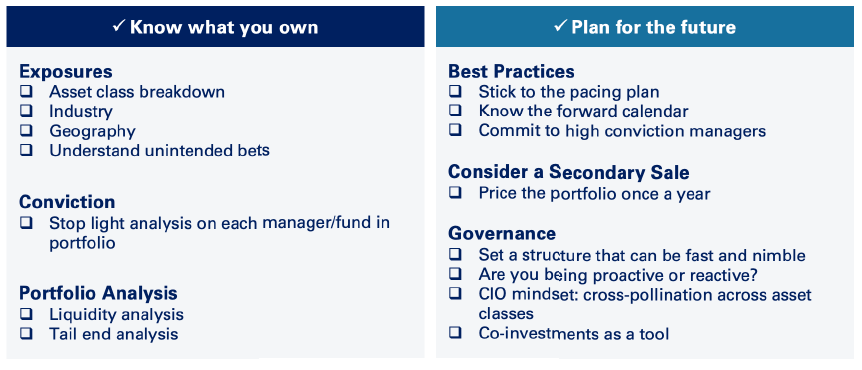
The following checklist offers a practical starting point for those evaluating their current portfolio and planning next steps:
Conclusion
For private market investors, secondary sales offer a powerful means to generate liquidity, reposition portfolios, and lay the groundwork for pension risk transfers in a changing marketplace. By approaching the process systematically, with robust data, the right team, and alignment of interests, investors can maximize value and minimize risk. Partnering with a knowledgeable advisor ensures that each stage of the secondary sale supports near-term needs and long-term objectives. If you are interested in evaluating your private markets portfolio or learning more about secondary sales, contact your NEPC consultant.