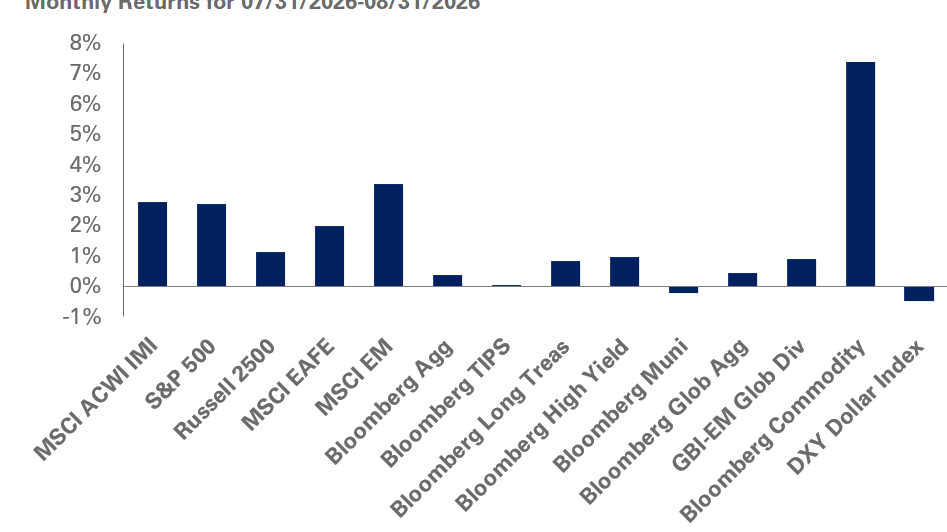
Equity markets came back with a vengeance in the second quarter of 2026 as geopolitical tensions faded, earnings surprised to the upside, and the AI-fueled cycle continued to permeate across sectors and regions. Oil prices sank on hopeful news of a possible truce regarding the conflict in Iran, finishing the quarter below $70 a barrel after beginning the quarter above $100. Inflation appears subdued, though remains stubbornly above the Fed’s target all while new leadership entered the Fed as new Chair Kevin Warsh took over in May succeeding Jerome Powell. Early signs are that changes are coming to the Fed, though unclear as to the extent and impact of said changes.
For the three months ending June 30, equity markets posted broad outsized returns across regions and sizes. The S&P 500 Index ended the quarter up 15.2% with favorable sentiment returning to the AI names alongside broad-based upside surprises to earnings. Emerging markets (EM) was the best performing market, adding 24.1% for the quarter as AI-related names in South Korea and Taiwan benefitted from the U.S. capex cycle. EAFE also posted double digit returns, finishing up over 10%, though still underperformed given the lack of tech exposure relative to the U.S. and EM.
Interest rates rose across the U.S. yield curve during the quarter, largely in the belly of the curve between the 1- and 3-year points as Fed Funds Futures flipped from expecting rate cuts at the start of the year to now forecasting a hike by the end of 2026.
U.S. 10-year Treasury yields were just 12 basis points higher for the quarter, ending the period with a yield of 4.4%, however 2-year yields were up 36 basis points to 4.1%. Credit markets benefitted from the favorable sentiment backdrop, with the Bloomberg U.S. High Yield index posting a gain of 2.5% for the quarter while credit spreads for high-yield bonds tightened considerably by 47 basis points.
Meanwhile, public real assets were dragged down by the slide in oil prices with spot WTI Oil down more than 32% for the three months ended June 30; during this period, the Bloomberg Commodity Index posted losses of 8.1%. Gold continued its slide out of favor so far this year, losing 14.1% for the quarter and barely hanging on to $4,000/oz.
We encourage investors to fully utilize the portfolio risk budget and recommend maintaining a U.S. equity overweight within public equity allocations given the supportive macro backdrop and exposure to broad-based earnings strength unique to the U.S. market. We still recommend investors hold high-quality, liquid assets and suggest holding safe-haven fixed-income securities at strategic target levels to support portfolio liquidity. We also advise shying away from liquid segments of lower-quality credit given tight spread levels and market sentiment.
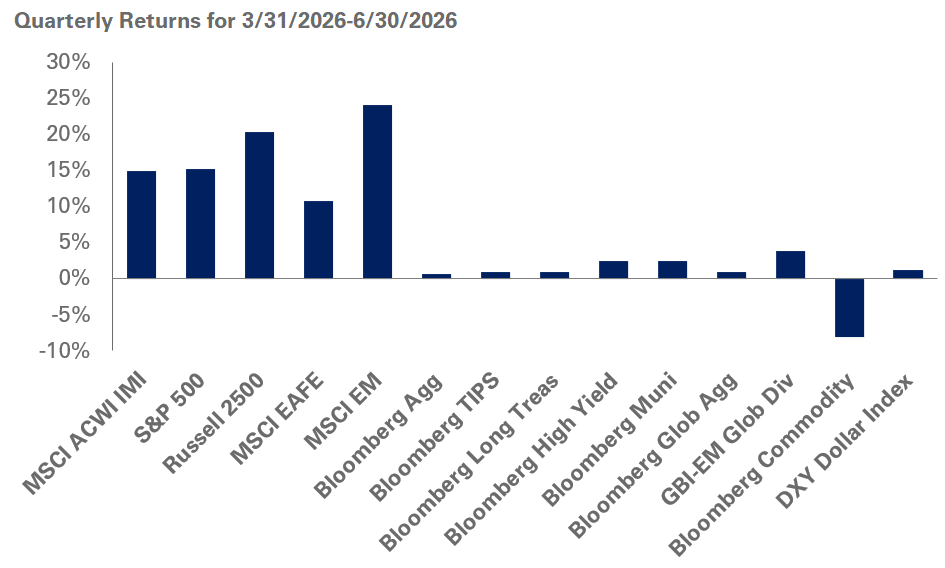
As of 6/30/2026, Source: S&P, Russell, MSCI, JPM, Bloomberg, Factset