
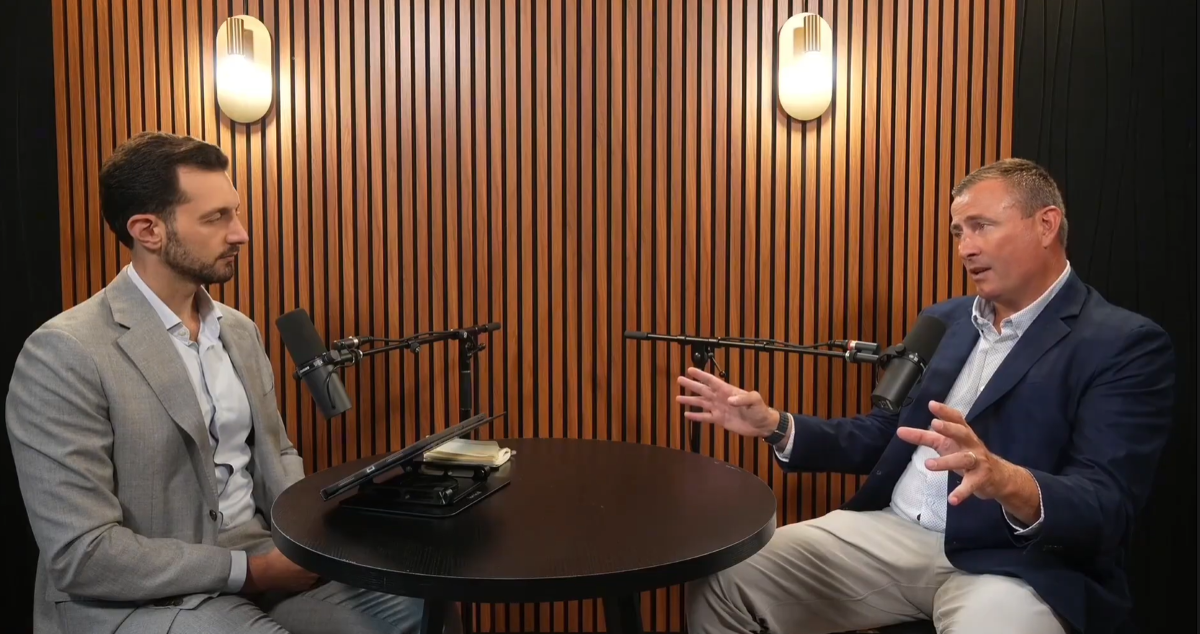
How I Invest Podcast: NEPC President on AI Portfolio Risk, Finding Top Funds, and Preparing for a Downturn
NEPC President Tim McCusker joined David Weisburd on his How I Invest podcast to discuss the principles that guide successful institutional investing, drawing on his experience advising more than 400 clients across approximately $2 trillion in assets. McCusker explores the importance of aligning portfolios with an organization’s goals, constraints, and time horizon rather than reacting to peer comparisons or short-term market movements.
. . .
Listen to the full episode on any of the platforms below for insights into building resilient portfolios and navigating the complexities of long-term institutional investing.
Spotify
YouTube
Apple Podcast


Pensions & Investments: Meet the 2026 class of P&I WorldPensionSummit Rising Stars nominees
The Pensions & Investments WorldPensionSummit is honoring individuals who are reshaping the future of institutional investment.
. . .
“Nominees for the second class were required to have around 10 years of industry experience and provide evidence of their progress, contributions and positions as role models.”
. . .
Judges will select 15 Rising Stars from the 29 nominees, with honorees recognized at the WorldPensionSummit in The Hague this November.

Pensions & Investments: The rise of multistrats: why D.E. Shaw, Millennium take the top spots in hedge fund ranking
Hedge funds are back and bigger than ever before. And now a growing category sits atop the industry: multistrategy funds.
. . .
Investor flows often happen at the wrong times coming out and the wrong times coming in, said Sarah Samuels, CIO and partner at consultant NEPC. But for those that had the fortitude to keep going with hedge funds even after some years of underperformance relative to fully invested markets, there have been some strong returns in recent years.
“We have a pretty high bar for hedge funds to make their way into a portfolio,” Samuels said. “We are very supportive of the right ones, and the way that we think about it is: Do you provide something unique in terms of a unique return stream that you can’t get elsewhere in the public markets, like a unique alpha stream? Is it a diversifier, or is it a return enhancer? And we’re looking for a certain bogey of how much of the alpha goes to the manager versus how much does the investor keep?”
. . .

Institutional Investor: Despite Healthcare Systems Healing, Hospitals Still Need to Tap into Their Portfolios
Healthcare conditions are improving, but not enough for hospital systems to stop drawing on their portfolios.
. . .
Institutional healthcare investors like NEPC are “seeing clients increasingly relying on their operating pools.
. . .
David Moore, a partner at NEPC who heads the advisory giant’s healthcare team, said he is “seeing clients increasingly relying on their operating pools for a source of liquidity.”
. . .
While rising costs are pressuring margins, NEPC’s Moore added that the healthcare systems have become increasingly nimble in adjusting to changing market conditions.
. . .
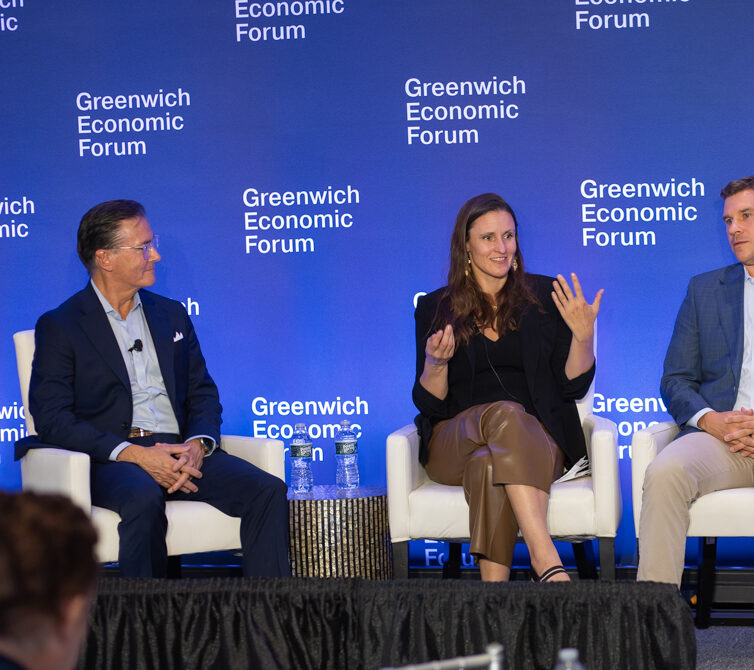
PitchBook: Liquidity, private credit and the regulatory environment keep LPs up at night
Liquidity, valuations and private credit were key themes at the Greenwich Economic Forum, an annual gathering of alternative investors that took place in Greenwich, CT., from 5-7 October.
. . .
Late last year, NEPC adjusted its pacing model to reflect this longer hold period. The firm extended its fund life assumption for VC vehicles to 17 years. Other assumptions include 15 years for buyout, 16 years for fund-of-funds and eight years for private debt.
Without these adjustments, actual fund lives and net asset values extend beyond the model’s assumptions and reduce LPs’ capacity to commit to future funds, said Sarah Samuels, the investment consultant’s chief investment officer.
“Don’t try to time vintage years, and don’t skip funds. If you do need to pull back, pull back in check size. Don’t skip a high-conviction GP,” she said.
. . .

Pensions & Investments: Endowments scored big on SpaceX, creating a potential risk management problem for universities
U.S. college and university endowments are beginning to post their returns for the fiscal year ended June 30, with at least two citing their investments in SpaceX as a major driver of outperformance, but experts warn the high concentration of their portfolios in a single stock creates asset allocation and risk problems.
. . .
Colin Hatton, principal and senior consultant for endowments and foundations at NEPC, said concentration risk becomes more acute as a holding grows. One of the clearest warning signs for investment committees is when a single company reaches roughly 5% of total assets, he said.
Such concentrations are uncommon in modern endowment portfolios, which generally rely on diversification to generate steadier returns and support annual spending, he said. Still, large single-company positions are not unprecedented: Some institutions with sizable venture portfolios are approaching 5% exposure to individual companies, and a smaller number have exceeded that level.
. . .

Structured Credit Investor: Rated feeder boom driven by insurers, says NEPC
Rated note feeder structures continue to gain traction across private markets, as institutional investors seek more efficient ways to allocate capital while managing regulatory constraints.
. . .
“Rated note feeder structures can improve capital treatment by allowing a portion of a private market investment to be held on Schedule D rather than Schedule BA,” Colton Lavin, principal and senior investment director in private debt at NEPC tells SCI. “As a result, we have observed some investors, particularly insurance companies, view these structures as a potential tool for expanding private market allocations while managing associated capital charges.”
. . .
Despite the growth in issuance, NEPC cautions that rated note feeders should not be the primary driver of allocation decisions. Instead, investors should first assess the underlying private market strategy before considering whether a rated feeder structure adds incremental value.
“We believe rated note feeders should generally be viewed as a secondary consideration rather than a prerequisite,” Lavin adds.
. . .
Click here to continue reading the full Structured Credit Investor article.

Family Office Exchange (FOX): Aligning the Investment Function and Mandate With the Family's Needs With Karen Harding and Stacey Flier
Karen and Stacey share their perspectives on how the investment needs, preferences, and expectations of families and family offices have evolved over the years. Drawing on decades of experience advising ultra-high-net-worth families, they discuss the growing complexity of the investment function and the increasingly sophisticated approaches families are taking to achieve their objectives.
. . .
“I think what’s really interesting is that the decision isn’t really a decision about outsourcing the decision-making. It’s really a decision about how you partner together. Most OCIO relationships, at least the best ones, are actually really collaborative. The family is still in control.”
. . .
“Not only is the investment environment dynamic and changing, but families are dynamic and changing. And we want to be there partnering with our families through that process.”
. . .
“The family is still in control. They are the ones who are setting the objectives, the goals, the priorities, the overall direction—all of those things. But their OCIO partner is helping them execute the day-to-day parts of the strategy. They’re providing the resources and bringing those best practices to the table to help them meet their goals.”
. . .
Click here to listen to the full podcast epsiode from Family Office Exchange.

Pensions & Investments: DOL’s alts proposal could accelerate the shift to 3(38) fiduciaries in DC plans
Plan sponsors increasingly want advisers to play a bigger role in investment decisions, and the recent Department of Labor proposal on investment alternatives in defined contribution plans could further fuel that appetite.
. . .
Aaron Chastain, partner and corporate solutions leader at NEPC, said the firm’s corporate-client discretionary assets have increased about 4.5 times over the last five years.
. . .
Chastain said he expects some sponsors to keep a 3(21) adviser for most of the plan, while handing off manager selection or operations for a specific sleeve — such as alternatives — to a 3(38) manager.”
“Using an external party or outsourcing doesn’t have to be an all-or-nothing type approach,” Chastain said.

Institutional Investor: Overseas Stocks Drive Double-Digit Returns for State Plans Like Louisiana and New York
Several state pensions have benefited from the surge in non-U.S. equities, including emerging markets.
. . .
According to NEPC’s head of marketable equity research Nedelina Petkova, strong performance from financials, industrials, and defense-related businesses and ongoing improvements in Japan have helped international developed markets. Plus, Petkova wrote that EAFE (Europe, Australasia, and the Far East) performance “has been less dependent on a small number of technology companies and reflects a broader set of economic drivers than the U.S. market.”
. . .